Column · @getgalapagosnationalparkdigest
What It Means to Be Galápagos National Park Certified
Visiting the Galápagos Islands feels like stepping onto a different planet. The wildlife has no fear of humans, the landscapes shift from volcanic black to turquoise bays, and the sense of isolation is almost absolute. But that very isolation and uniqueness bring a heavy responsibility. Every visitor, every boat, and every guide operates under a system of rules designed to protect one of the most fragile ecosystems on earth. At the center of that system lies a designation that separates the merely curious from the genuinely prepared: being galápagos national park certified.
This certification is not a marketing badge. It is a formal recognition that a vessel, its crew, and its itinerary follow the strict environmental and operational standards set by the Galápagos National Park and the Ecuadorian government. For anyone considering a Galápagos cruise, understanding what this certification actually entails is the difference between a trip that supports conservation and one that undermines it. And for a company like the one behind the Natural Paradise yacht, which positions itself in the luxury segment, certification is a baseline requirement, not an extra.
The Framework Behind the Certification
The Galápagos National Park covers about 97 percent of the land area of the archipelago, and the surrounding marine reserve extends even further. Together they form a UNESCO World Heritage site that is also a living laboratory. Human access is tightly controlled. Every vessel that enters the park must hold a valid operating permit, and that permit is tied directly to the vessel's certification status.
To earn and maintain galápagos national park certified status, a vessel like the Natural Paradise yacht must comply with a long list of requirements. These include designated navigation routes, limits on the number of passengers allowed ashore at any one time, and strict protocols for waste management. No untreated wastewater goes overboard. All garbage is sorted and returned to the mainland for proper disposal. Fuel spills are not just fined; they can result in immediate revocation of the permit.
But the certification goes beyond hardware and procedures. It also governs the human element. Every guide on board must hold a guiding permit issued by the park, which requires passing a rigorous exam that tests knowledge of local ecology, history, and regulations. These are the certified naturalist guides who lead every hike and every snorkeling session. They are not just storytellers; they are enforcers of the park's rules. If a guest steps off the trail or tries to touch a marine iguana, the guide is required to intervene. That is not a suggestion. It is a condition of the certification.

Why Certification Matters for Wildlife Encounters
One of the most common questions people ask before booking a Galápagos cruise is whether they will see the animals up close. The honest answer is that you will see them up close, but on their terms. The Galápagos giant tortoise will amble across the path without concern. A blue-footed booby will stand a few feet away and preen its feathers. The Galápagos sea lion will swim right up to your snorkeling gear and stare at you with the curiosity of a puppy.
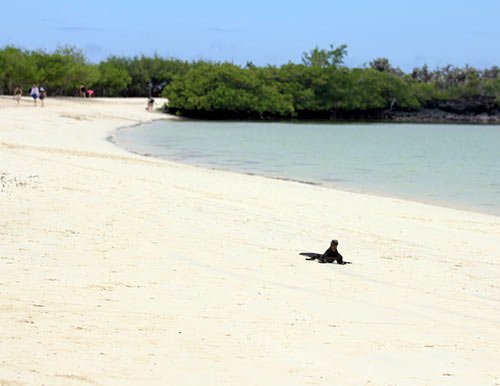
This proximity is not accidental. It is the direct result of decades of strict protection enforced by the park and the certified operators. A galápagos national park certified vessel follows landing schedules that rotate among visitor sites, ensuring no single area gets overused. On Santa Cruz Island, for instance, the trails at the Charles Darwin Research Station are carefully managed so that the giant tortoises in the breeding program are not stressed by constant human presence. On Isabela Island, the nesting beaches for marine iguanas are off limits during breeding season. The certified naturalist guides know these windows and adjust the itinerary accordingly.
That kind of adaptive planning is what separates a certified cruise from a generic one. When you book with a certified operator, you are not just buying a cabin and a meal plan. You are buying access to a system that prioritizes the health of the ecosystem over the convenience of the visitor. It means you might leave the dock at 6:00 a.m. to catch the low tide at a particular cove, or skip a popular beach because a frigatebird colony is nesting. The trade-off is that your encounter with the wildlife will be authentic and sustainable.
The Role of PNG Certification
Beyond the park's own certification, there is also the broader PNG certification (Parque Nacional Galápagos) that some operators pursue. This is a more comprehensive designation that audits everything from fuel efficiency to crew training to the sourcing of food and supplies. While not every vessel carries this additional credential, it is becoming a mark of distinction among luxury travel operators who want to demonstrate a deeper commitment to ecotourism. The Natural Paradise yacht, for example, would need to align its operations with these standards to maintain its position in the high end of the market.
PNG certification also requires that a portion of the revenue from each trip goes directly into conservation programs. That money funds invasive species removal, habitat restoration, and ongoing research at the Charles Darwin Research Station. It is a tangible way for visitors to contribute to the preservation of the very places they came to see. When you choose a galápagos national park certified cruise, your ticket price is not just paying for the crew and the fuel. It is paying for the future of the islands.

What to Look for When Booking
If you are planning a Galápagos cruise, the presence of certification should be one of your first checks. But not all certifications are created equal. Here are a few things to look for:
- Verify that the vessel holds a current operating permit from the Galápagos National Park. This is public information and can be confirmed through the park's website or your travel advisor.
- Ask about the guide-to-guest ratio. A higher ratio means smaller groups and more personalized attention during shore excursions. Certified vessels typically keep groups under 16 people per guide.
- Check the itinerary for designated visitor sites. The park controls exactly which spots can be visited and for how long. A certified operator will follow those limits without deviation.
- Inquire about waste management protocols. The best vessels, especially those in the luxury segment, have zero-discharge policies and carry their waste back to the mainland.
- Look for evidence of ongoing training. Certified naturalist guides are required to update their knowledge regularly. Ask if the crew participates in annual workshops or field courses.
These checks might seem like homework, but they are worth the effort. A single uncertified vessel can introduce invasive species, disturb nesting birds, or damage fragile coral reefs. The park has limited enforcement resources, so the burden often falls on the traveler to make responsible choices.
The Human Side of Certification
Behind every certified vessel is a team of people who take the rules seriously. The captain, the engineer, the chef, and the naturalist guides all undergo training specific to the Galápagos. They know that a dropped anchor in the wrong spot can scar a reef for decades. They know that a piece of fruit peel thrown overboard can carry seeds that outcompete native plants on Santiago Island. They know that the Darwin's finches, which helped shape the theory of evolution, are vulnerable to diseases carried by human hands.
That level of awareness does not happen by accident. It is built into the certification process. The galápagos national park certified designation is a commitment to a culture of care. For the traveler, it means you are surrounded by people who understand the stakes. For the islands, it means that tourism can continue to fund conservation without destroying the very thing it seeks to preserve.
Choosing a Path That Lasts
The Galápagos Islands are not a theme park. They are a living, breathing, and fragile archive of evolutionary history. The choice of which cruise to book is not just a matter of comfort or price. It is a decision that affects the archipelago's future. By choosing a galápagos national park certified operator, you align your travel with the highest standards of ecotourism. You support the local economy through legitimate channels, you fund conservation efforts, and you ensure that the next generation of visitors will still find blue-footed boobies dancing on the shore and Galápagos sea lions basking in the sun.
That is the real value of certification. It is not a sticker on a brochure. It is a promise that the trip you take today will not diminish the wonder of tomorrow.